Regularization 2026: your status and when the TIE arrives
Nobody asks how to apply any more — they ask how their own file is doing. How to check your status, when the TIE is issued, and what to do if yours is stuck.

On 30 June 2026 the window to apply for Spain's extraordinary regularization of migrants closed, with no extension. It closed with around 1.2 million applications — more than double the 500,000 the Government had estimated when it approved the measure.
Now a different, more delicate phase begins: the processing and resolution of the files. If you filed your application, what you do (or fail to do) over the coming weeks can decide the outcome. And if you didn't make it in time, the extraordinary route has closed — but the ordinary immigration procedures remain open.
If you filed your application: this is what happens now
1. Keep your filing receipt safe
The filing receipt and your file number are now your most important documents: they prove you applied in time and are the reference for every communication. Check that your contact details (phone, email, address) are correct: notifications go preferentially through the same channel you used to file.
2. Admission for processing and the provisional work permit
From admission for processing you get a provisional authorization to reside and work while the file is resolved — employed or self-employed, in any sector and anywhere in Spain.
3. Correction requests: your most critical moment
If a document is missing or something isn't properly proven, you'll receive a correction request (requerimiento de subsanación) with a short deadline (usually ten working days) to provide it. This is where most files fall — not on substance, but on form. If what you're missing is an unapostilled document from your home country, the ordinary route won't make that deadline: there is a 24-hour urgent apostille track. And if what you are missing is an Argentinian document, the complete Hague Apostille guide explains which version to request, who issues it and which stretch of the process eats the deadline.
- Not checking notifications in time and letting the deadline pass.
- Re-submitting the same defective document instead of fixing the real problem.
- Not understanding what exactly the Administration is asking for.
If you receive a requerimiento, don't leave it for the last day; if you're unsure what's being asked, have a professional review it before you answer. A well-answered requerimiento saves the file; a badly answered one sinks it.
4. The decision: deadlines and administrative silence
The Ministry has a three-month resolution period per file and is already issuing the first favourable decisions; given the volume, they will be staggered over the coming months. Be careful with administrative silence: check your specific case before assuming anything, because the consequences are not the same in every procedure.
5. The TIE: the last step to make your residence real
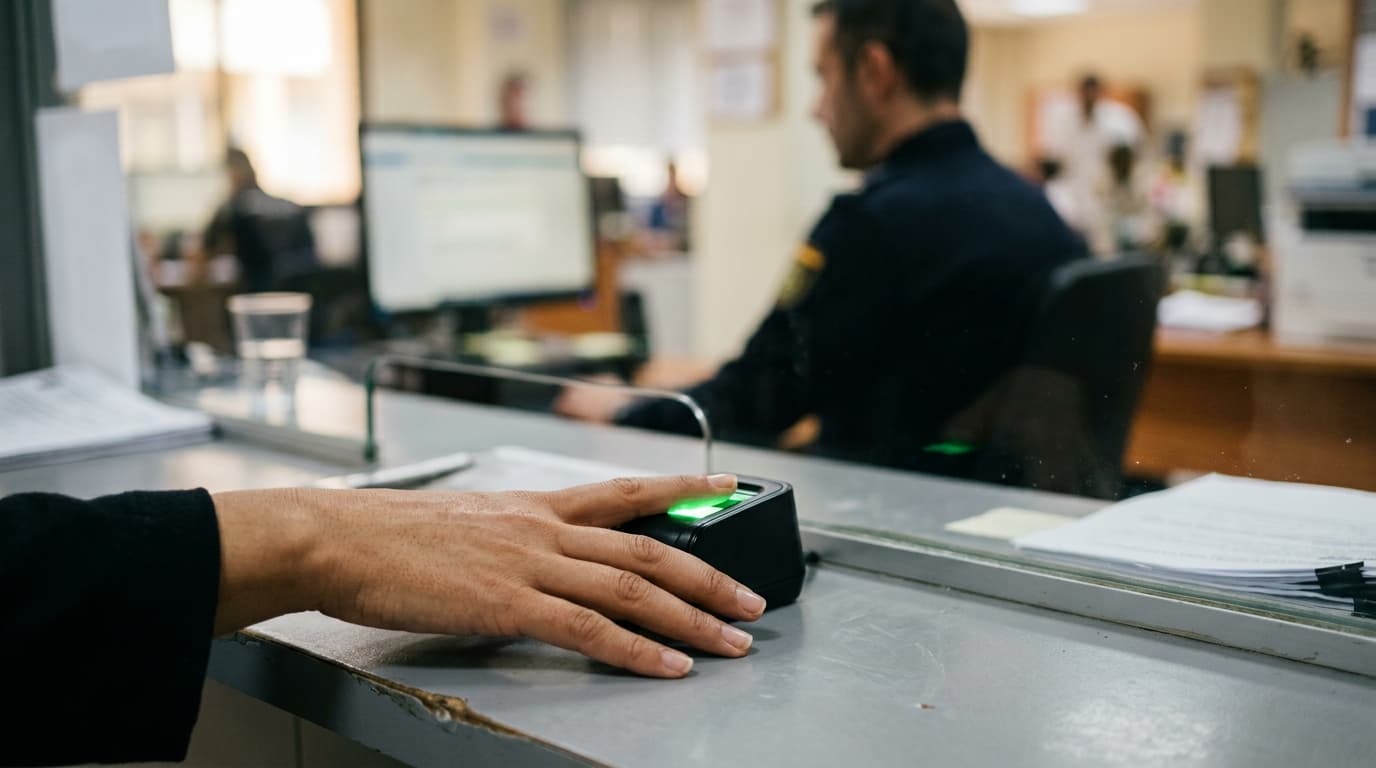
If the decision is favourable, you have one month to apply for the TIE at the National Police documentation unit of your province. Without the TIE, the permit exists on paper but hasn't been made effective. Don't let that month slip by: if you can't find a fingerprint slot, we can hunt and book the appointment for you. Which documents to bring, where fingerprints are taken in the province and what to do if your passport has expired are covered step by step in how to get your TIE after the regularisation.
6. And after the first year
The authorization lasts one year and does not renew itself: when it ends, it has to be converted into an ordinary residence and work route (employed or self-employed). Plan that transition in advance.
Timeline: what to expect over the coming months
- Filing (until 30 June 2026): closed. You have your receipt and file number.
- Admission for processing: the provisional work permit arrives.
- Review and, where applicable, a correction request: short deadline to respond. Critical moment.
- Decision (3 months): favourable or unfavourable. The first grants are already being issued.
- TIE application (1 month from a favourable decision): at the National Police.
- One-year validity: before it expires, prepare the switch to an ordinary permit.
What the 2026 extraordinary regularization was
It was not a new law or an amnesty: it was an exceptional procedure with fixed deadlines, set out in Royal Decree 316/2026, of 14 April, which amended the Immigration Regulation (RD 1155/2024). It granted a one-year residence and work permit. The window ran from 16 April to 30 June 2026, with filing through the Mercurio platform, Correos and the Immigration Offices. If you want to go over how your own case fits into all this, we do exactly that in an immigration advisory session.
Two large groups could apply: people in an irregular situation who were in Spain before 1 January 2026, and international protection applicants who had applied before that date (even if the asylum claim was refused or pending).
- Prove a minimum continuous stay of five months at the time of applying.
- Have no criminal record and pose no threat to public order, security or public health.
- File form EX31 (international protection) or EX32 (all other cases).
The closing numbers: what the record volume means
The figure of 1.2 million applications (Mercurio's registers suggest it could be closer to 1.3 million, still pending de-duplication) against the 500,000 forecast has one practical reading: the Administration is saturated.
- Admission for processing slows down: a few days after the close, a large share of applications had not yet been formally admitted.
- Correction requests multiply: with this many files, any badly submitted document triggers a requerimiento, and answering it well and on time is decisive.
Where this regularization came from
It didn't come out of nowhere. It originated in a Popular Legislative Initiative registered in 2024, with more than 700,000 signatures and the backing of social organizations and trade unions. The measure is not free of legal controversy: some regional governments have challenged it in court, and certain questions may end up before higher instances. For anyone with a file in progress this changes nothing essential — keep following the procedure normally — but it does argue for keeping your case well organized.
How to prove your stay in Spain: the evidence that decides everything
Both in the regularization and in arraigo, one element always appears and usually decides the file: proving continuous stay. And it's the part people neglect most.
- Historical padrón certificate (better than the simple one).
- Medical reports or appointments, health card, prescriptions.
- Bank movements and direct-debit receipts.
- Rental contracts and utilities in your name.
- Named invoices and money transfers.
- Training certificates, enrolments, children's school reports.
- Named transport passes and social services documentation, where applicable.
The key is not piling up one type of document, but covering the required period without gaps, with different sources that reinforce each other.
If you missed the deadline: your alternatives are still open
The deadline was single and non-extendable, and the Government kept 30 June despite the requests for an extension. Missing it closes the extraordinary route, but not your options: the ordinary procedures remain in force, and for many people they are a more solid route in the medium term.
Arraigo sociolaboral
You can apply with 2 years of continuous stay (absences ≤ 90 days) and one or several contracts adding up to ≥ 20 hours per week, lasting more than 90 days, with pay reaching at least the proportional share of the current SMI (minimum wage) or the collective agreement rate, with a solvent employer up to date with its obligations.
Broadly, the procedure: application on the official form + stay and contract documentation, fee (form 790, code 052) after admission for processing, and a three-month resolution at the Immigration Office. The contract must include the clause making its effect conditional on approval, and the permit lasts one year, allowing you to work from the grant. We compare it with the other figures in the five arraigos of 2026.
Arraigo social, familiar, for training and second chance
- Social: for those with family ties or planning self-employment, with an integration report.
- Family: relatives of Spanish citizens and other cases; usually granted for five years.
- Training (socioformativo): lets you study and, depending on the case, work while you study.
- Second chance: for those who lost a previous permit and want to recover their regular status.
Common mistakes at this stage (and how to avoid them)
- Confusing the NIE with a residence permit: they are different things (we explain it in NIE, TIE and residence certificate).
- Ignoring notifications: an unanswered requerimiento kills an application that met the substance.
- Choosing the wrong alternative route: jumping into an arraigo without meeting, or being able to prove, the minimum time.
- Not properly proving your stay: the padrón alone is rarely enough.
- Leaving Spain at the wrong moment, breaking the very continuity you're trying to prove.
How AEM Asesoría helps in Benalmádena and on the Costa del Sol
At AEM Asesoría we specialize in immigration in Benalmádena (Arroyo de la Miel), Málaga and the Costa del Sol. Right now we can: review the status of your application and prepare the answer to any requerimiento; process your TIE when the decision arrives; plan the transition from your one-year authorization to an ordinary route; study your case if you missed the deadline; and, further down the road, walk you towards Spanish citizenship by residence once you meet the legal timelines. Start with our immigration advisory in Málaga, take the eligibility quiz or write to us via contact.
Frequently asked questions
How do I check the status of my extraordinary regularization in Spain?
Through the same channel you filed with: if you used Mercurio, log in with your digital certificate or Cl@ve and your file number; if you filed at Correos or an Immigration Office, use the number on your receipt. That tells you whether the file has been admitted for processing, whether a correction request is pending, or whether it has already been resolved. Keep an eye on the email and phone number you gave, too: notifications go preferentially through that same channel.
When will I get my TIE after the 2026 regularization?
The TIE does not arrive on its own. From the favourable decision you have one month to book an appointment at the National Police documentation unit of your province and give your fingerprints. In Málaga cards are currently taking 20 to 40 days from the fingerprint appointment. Until then the permit exists on paper but has not been made effective, so that month cannot be allowed to slip by.
What happens if my file is still unresolved?
The Ministry has three months from admission for processing, but with 1.2 million applications against the 500,000 forecast, decisions are being staggered: going past that deadline does not mean your file is in trouble. In the meantime your provisional authorization stays valid and you can work. What is worth checking is that you have no unanswered requerimiento, which is the real cause of most delays and refusals.
Can I work while I wait for the decision?
Yes. From admission for processing you get a provisional authorization that lets you work, employed or self-employed, in any sector and anywhere in Spain while your application is resolved. Two limits: it does not entitle you to work or reside in other EU countries, and it is provisional, since it depends on the final decision.
Will the extraordinary regularization deadline be extended?
No. The Government confirmed the window closed on 30 June 2026 with no extension. If you didn't file in time you can no longer use this extraordinary route, though the ordinary immigration procedures remain available.
How long will my file take to be resolved?
The Ministry has a three-month resolution period per file, counted from admission for processing, and the first favourable decisions are already being issued. With 1.2 million applications filed against the 500,000 forecast, it is reasonable to expect decisions to be staggered over the coming months.
What do I do if I'm asked for additional documentation (requerimiento)?
You must respond within the deadline stated in the notification, usually a short one. Provide exactly what is requested, in the correct form; if in doubt, have a professional review it before you answer.
Does the regularization give me Spanish citizenship?
No. The extraordinary regularization grants a one-year residence and work permit, not Spanish citizenship. For citizenship by residence you must meet the legal residence periods set by the Civil Code, and the clock starts once you hold a valid residence permit — not from the day you arrived in Spain.
If I'm granted residence, what do I have to do next?
You have one month from the favourable decision to apply for the TIE at the National Police. The authorization lasts one year: before it ends you will need to convert it into an ordinary residence and work route.
I didn't manage to file. What options do I have left?
The ordinary routes remain open, above all the arraigo figures (sociolaboral, social, family, training and second chance), plus other authorizations depending on your profile. An individual assessment is the sensible first step.
Does having a NIE mean I'm in a regular situation?
No. The NIE is only a foreigner identification number, and it can even be obtained as a non-resident for one-off transactions such as buying a car or opening a bank account. Regular status comes from a valid residence permit, made effective through the TIE. They are two different things, and confusing them is the most common mistake.
I had an arraigo in progress when the regularization came out. What happens to it?
As a general rule it will be resolved through its own route without needing the regularization, except in specific cases. It is worth checking the status of that file so you don't duplicate procedures.
How do I prove my stay if I worked informally or have no contracts?
With any dated document in your name: historical padrón, medical reports, bank movements, receipts, invoices, training certificates, and so on. You don't need a contract; what matters is covering the required period with a coherent combination of documents.
I live in Málaga or on the Costa del Sol. Where is all this processed?
Your file is resolved at the Immigration Office of your province, and the TIE is then applied for at the National Police documentation unit in Málaga. From AEM Asesoría, with an office in Arroyo de la Miel (Benalmádena), we review the status of your application, prepare the answer to any requerimiento and process the TIE.
Want a 1:1 read of your case?
Book a 45-minute consultation. We'll map your file across the new regulation and tell you the clean route forward.