Renewing your student visa in Spain: how to do it in 2026
It is called an extension, it has two deadline windows, and there is a catch: you may not need it at all. Here is how we handle it every September.


Every September the same scene repeats at our Benalmádena office: someone walks in with a card that expired in June, next year's enrolment still unsigned, and the belief that «since I am still studying, this renews itself». It does not. And under the new Immigration Regulation there is a twist almost nobody explains properly: you may not need to renew at all. Let's take it in order, because getting this wrong costs months and, at worst, a whole academic year.
First things first: do you actually need to renew?
This is the question almost nobody asks, and the one that saves the most trouble. Study permits used to be granted year by year: you finished the academic year and had to go through the process again. Under Royal Decree 1155/2024, authorisation for higher education is granted for the full length of the programme, not year by year.
In practice: if you are doing a four-year degree and were granted the permit for all four, there is nothing to extend halfway through. What you may still need is to renew the physical card (TIE) if it expires before your authorisation does, which is a different and far simpler procedure. If you are unsure which is which, we explain it in NIE vs TIE: the differences.
Do not relax completely, though, because there is small print almost nobody mentions: if your authorisation was granted for more than one year, to keep it alive you must submit your enrolment (or equivalent document) every year, at the start of each academic year, proving you are still on the same programme. It is not an extension, it is a maintenance step. But skip it and the authorisation can lapse.
| Your situation | What actually applies |
|---|---|
| Official degree, master's or PhD, granted for the full duration | No extension. Just the yearly enrolment step, plus a TIE renewal if the card expires sooner |
| Authorisation granted for a single academic year | Extension |
| Language school or non-official studies | Extension |
| You changed programme, institution or level | Extension, and the change must be justified |
| You have finished your studies and want to stay | Not an extension: it is a status change. Skip to the last section |
Deadlines: two months before, three months after
The rules set two windows, and they are not equivalent.
The good window is the two months before your authorisation expires. That is the one to use. Filing on time has an effect many people do not know about: your stay is considered extended until the immigration office decides. Even if the physical card expires while you wait, the filing receipt covers you.
The rescue window is the three months after expiry. It exists, filing there is legal, and your authorisation is also extended until a decision is issued, so you do not automatically become irregular. But it opens the door to a penalty procedure for late filing. And that penalty stays on your record.
One point of precision that matters more than it looks: the rules speak of months, not days. Two months are not always sixty days. Count date to date from the day your card expires, not by adding days on a calendar.
And a practical detail that makes the difference in Málaga: the bottleneck is usually not the immigration office, it is your university. Many institutions do not open next year's enrolment until July or September, and transcripts take time. Request both documents a month earlier than you think you need them.
The four requirements that decide your file
On paper there are more, but in practice files fall on these four.
1. Academic progress
Being enrolled is not enough: you must have passed and be progressing through the programme. Transcript from your institution, with a verifiable electronic signature. If you failed a whole year, prepare a documented explanation.
2. Enrolment for the new year
Valid admission or enrolment at a recognised institution, and consistent with what came before. Jumping from an engineering master's to a four-month language course raises the case officer's eyebrow.
3. Sufficient funds
Benchmarked against the IPREM for each month of stay requested. The classic mistake: showing only today's balance. The immigration office asks for statements covering the last few months to check the money is real and not a one-afternoon loan.
4. Health insurance
Public or private, with full cover across Spain, no co-payments and no waiting periods. This is where we see the most requests for further documents. Travel insurance or a policy with an excess will not do, whatever the insurer tells you.
On top of that come the usual general requirements: a valid passport with enough margin, no criminal record and no entry ban. On criminal records, a warning: extensions are being checked more strictly than a few years ago. If you have had any incident in Spain, raise it before filing, not after the request arrives.
How to file: online only, fees and receipt
The extension is filed with the immigration office of the province where you will study. Watch out if you have moved: if you studied in Barcelona and now study in Málaga, your file goes to Málaga. Filing in the wrong province does not void it, but it triggers internal transfers that eat up weeks.
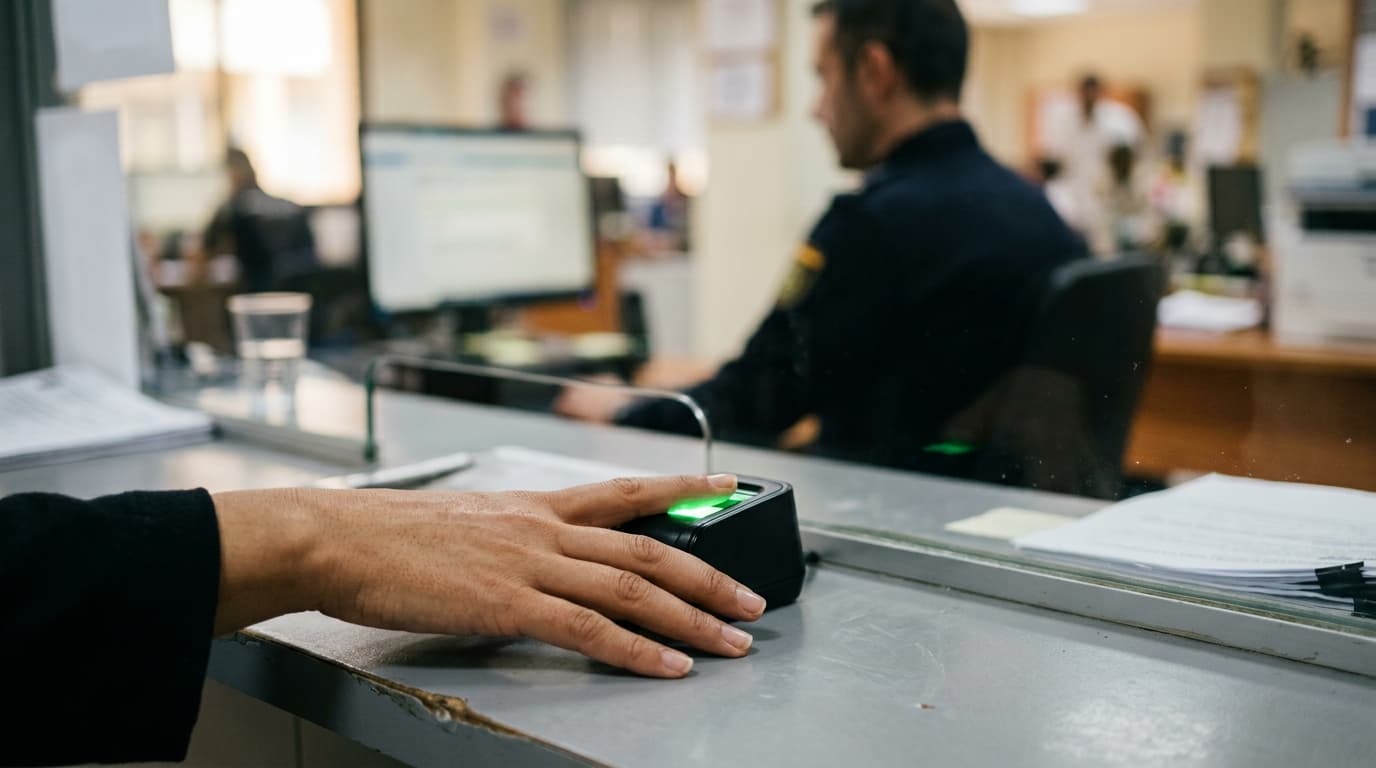
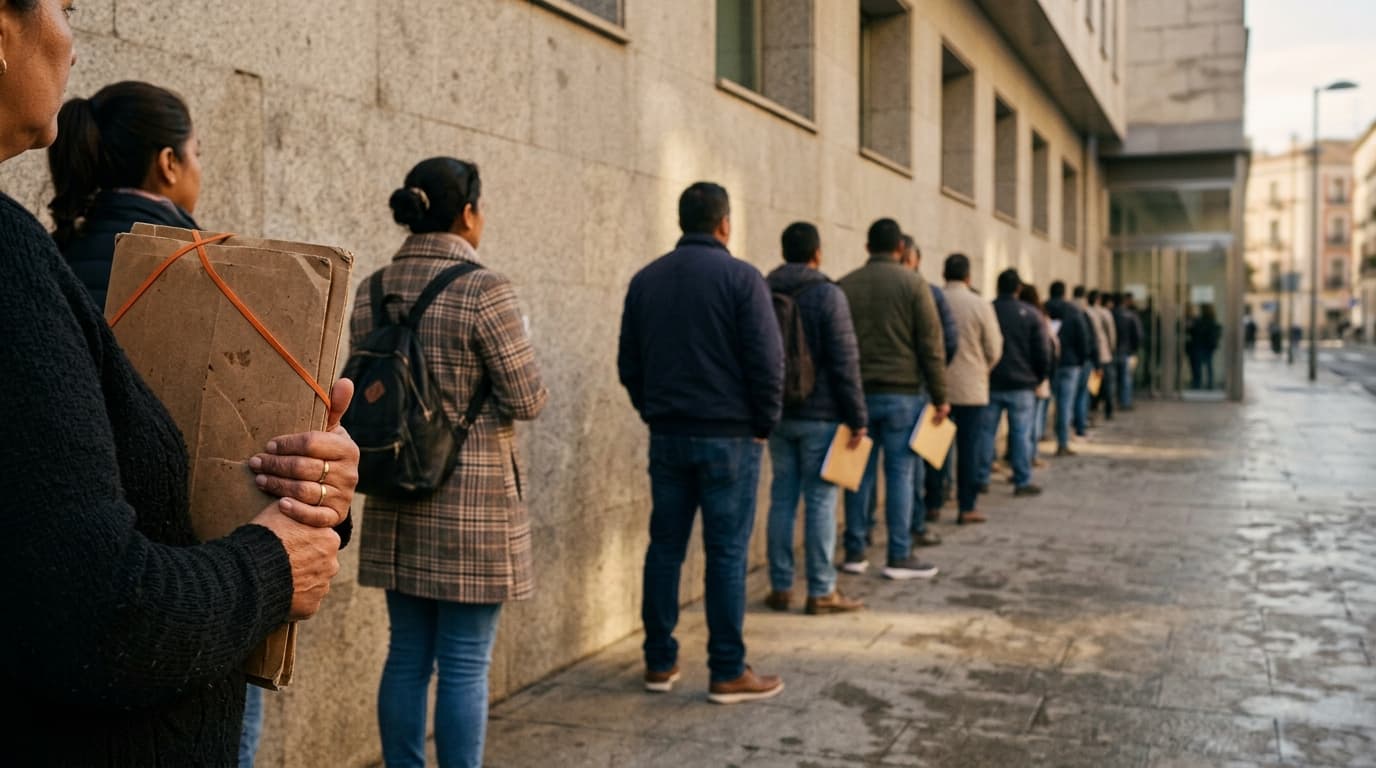
And here is the change causing the most trouble: the extension can only be filed electronically. Under the previous regulation you could file it at any public registry; not any more. Turn up at a counter with your folder under your arm and you risk having it refused.
That means you need one of these two things:
- Your own digital certificate, installed and valid, to file yourself.
- A registered agency with power of attorney filing on your behalf.
The upside of this change: you do not need an appointment for the extension. If you have been through what we describe in getting an immigration appointment in Málaga, that is good news. The appointment only comes later, and only if you need to renew the physical card.
You must pay the applicable fee before filing and attach the proof. And there are four documents you must keep, scanned and on paper:
- The filing receipt. It is your proof that the procedure is under way.
- A copy of the signed form.
- Proof of fee payment.
- A copy of everything you submitted.
The receipt is not just another piece of paper: it is what you show if the police stop you, what the bank asks for, and what proves your status if your TIE expires while you wait for a decision.
Mistakes that sink an extension
- Waiting until the card expires. You walk into the penalty window for no reason. Set the reminder three months ahead, not on the expiry date.
- A transcript without a verifiable electronic signature. A request for further documents is almost guaranteed. Check the document carries its secure verification code.
- Health insurance with co-payments or waiting periods. The number one reason for further-document requests. Ask your insurer for a certificate stating explicitly «no co-payments and no waiting periods».
- A bank balance that appears out of nowhere. Depositing the money the week before and submitting only that statement is the fastest way to be asked for explanations.
- Changing studies without justifying it. The change is legitimate, but it must be explained and documented. If you do not explain it, the case officer will interpret it.
- Trying to file at a counter. No longer a valid route for this procedure: online or nothing.
- Counting deadlines in days instead of months. Two months are not sixty days. Count date to date.
- Throwing away the receipt. Sounds absurd until someone asks for it and you do not have it.
And if you have already finished? Three routes
Here is the best news in this article, and the one most people do not know. Under the previous regulation you had to spend three years as a student before switching to a work permit. That requirement is gone. Today, once you complete higher education in Spain, you can apply directly for a change to residence and work.
If you are finishing, chances are your procedure is not an extension. And the deadline follows the same pattern: you can apply in the two months before or the three months after your study permit ends or you obtain your qualification. These are the three routes:
| Route | When it fits | What you need |
|---|---|---|
| Change to residence and work | You finished higher education and already have a job offer | A contract meeting legal requirements and proof of qualification |
| Residence permit to look for work or start a business | You finished but do not have a signed contract yet | Completed qualification and a timely application. Gives one extra year |
| Arraigo for training | Your academic path went sideways and neither of the above fits | Time of stay in Spain and a training commitment in an in-demand sector |
The choice is not cosmetic: each route has its own deadlines, and filing the wrong one can shut you out of the right one. To see how the third compares with the rest, we break them down in the five arraigo routes in 2026. And if your card expires within the next three months and you are finishing, that conversation belongs now, not on the expiry date.
Frequently asked questions
Can I stay in Spain if my student card has expired and I have not filed the extension yet?
Yes, you have up to three months after expiry to file, and your authorisation is extended until a decision is issued, so you do not automatically become irregular. But filing outside the two months before can open a penalty procedure, and that penalty stays on your record for future applications, including citizenship. If your card has already expired, file electronically as soon as possible and keep the receipt.
Can I work while the extension is being processed?
Yes. Higher education students can work up to 30 hours a week without a separate work authorisation, as long as it is compatible with their studies. While the extension is being processed, the filing receipt keeps your status regular. What must not happen is that work makes you fall behind academically, because academic progress is exactly what gets reviewed at renewal.
I changed university and city. Does that affect my renewal?
It does, quite a lot. The administration looks at the continuity of your academic path, so a change of institution, level or field must be justified properly and in writing. On top of that, the application goes to the immigration office of the province where you will study, not where you used to live: filing in the wrong province triggers transfers that cost weeks.
I finish my master's this year. Do I renew or switch straight to a work permit?
If you have completed higher education, renewing is usually no longer the move: the right step is applying for a change to residence and work. The new Regulation removed the old requirement of three years as a student. The decision depends on whether you already have an offer meeting the requirements and on the exact dates on your card, and that is worth half an hour of advice before filing anything.
Want a 1:1 read of your case?
Book a 45-minute consultation. We'll map your file across the new regulation and tell you the clean route forward.